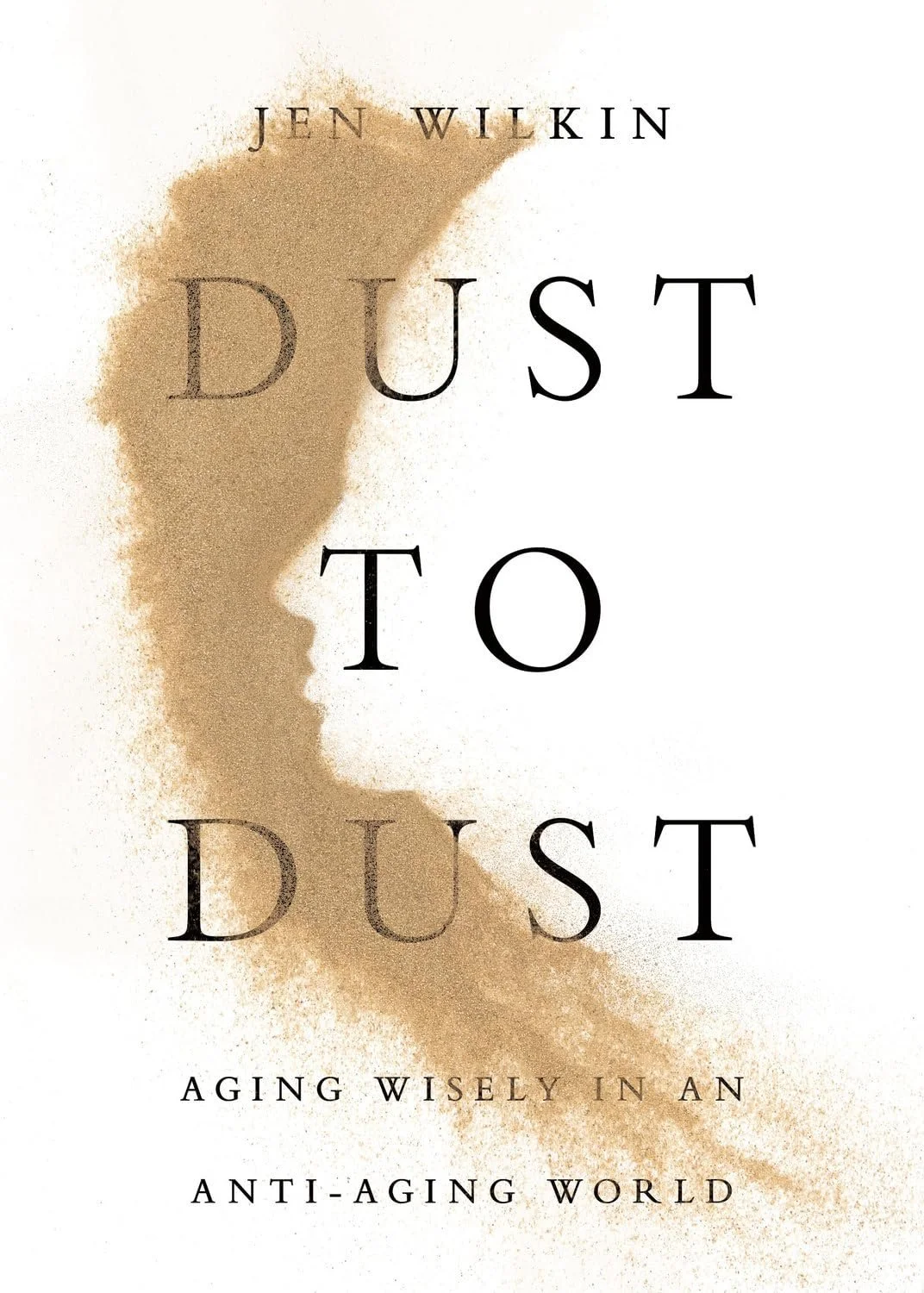
Dust to Dust: Aging Wisely in an Anti-Aging World
By: Jen Wilkin
[On my list of Most Anticipated Books of 2026]
“The false story of anti-aging says: outward decline signals loss of identity and fear of suffering and death. To age is to diminish. The true story of aging says: outward decline yields inward growth of spiritual, and resurrection hope. To age is to deepen.”
I was very intrigued when I saw Jen Wilkin’s latest book coming out on anti-aging as I don’t see much about that from a biblical perspective. I am on the cusp of midlife and I was just having a conversation with a friend about how I don’t have a skin care routine and it seemed like something someone my age probably should have figured out by now.
I tend to avoid most trends (or ‘routines’) so I figured I would be on board with what Wilkins was going to say in her book, but more than that I wanted to consider a biblical view of aging as I know I will continue to feel the pressure to conform to the world’s view of how I should look and I want God’s truth to be my truth.
Wilkins does offer her comments on all of that later on in the book, but she begins by looking at the chiasm of life. A chiasm is a literary device with the main point being in the middle with points leading up to it and reversing back down. Here is a snapshot of how she lays it out in her book:
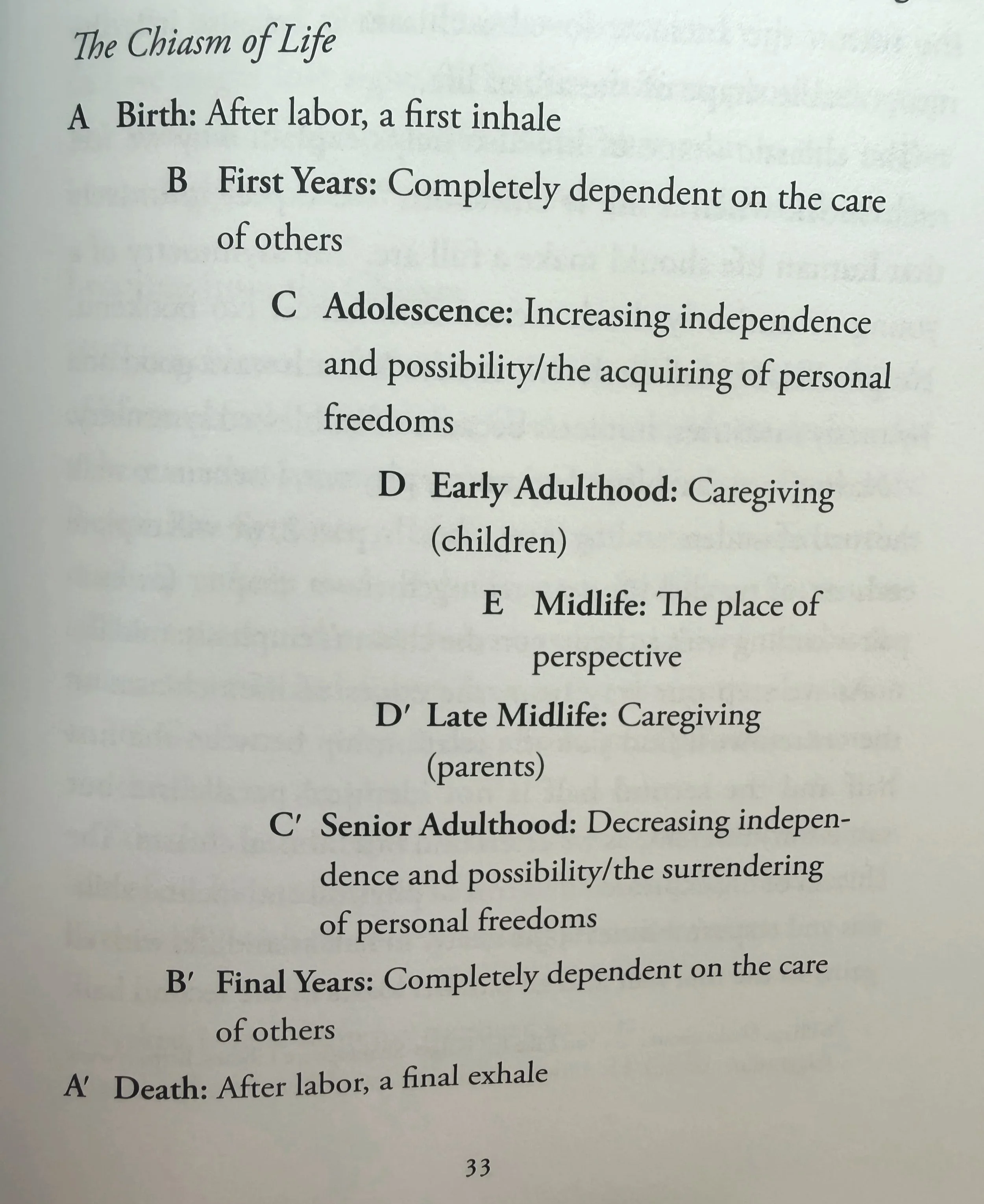
“If life is a chiasm, and if chiasms teach, what might the chiasm of life teach us? I suspect that God in his kindness designed it to be such that we might gain a heart of wisdom… Realizing that seasons follow a patterned order helps us recognize and inhabit the season we are in and discern how to live that particular season out of God’s true story. It can also help us prioritize how to use the time we are given.”
Her hope for the book is to grow our wisdom when it comes to “self-awareness, submission to God, and service to others” in the particular space of aging.
I really liked looking at it through this poetic lens. In a world that treasures self-sufficiency and independence, it’s always good to be reminded of God’s counter-cultural standard of interdependence and community.
God has designed life from beginning to end to include weakness and require us to depend on others and ultimately on him. We were never made to be self-sufficient creatures. We don’t always see it this way, but it is a mercy and a blessing that God allows us weakness. Not only because we need him but because it allows us a looser grip on this earthly life as we prepare for something better.
The verse Jen kept coming back to was Psalm 90:12 that admonishes us to number our days that we may gain a heart of wisdom.
How do we number our days? That is the question she seeks to answer with each chapter at each stage of life. Numbering our days requires us to confront the reality of death and illness, but also to recognize the joys and the growth that comes from hardship.
A mantra she uses in the book is ‘Bodies decline, people develop.’ Even if our bodies are wasting away, our minds and our souls are being shaped to look more and more like Christ. Numbering our days means looking at the development of our character and the way we use whatever bodies we have to worship God and serve others.
“Those older than us are not still valuable. Our elders in age and experience are not clinging to an eroding value. In a culture that fetishizes youth and views aging as a journey into irrelevance and uselessness, God’s family takes the view that our elders possess an ever-developing value, one that renders their contributions essential and indispensable— with increasing relevance not irrelevance.”
I have lived 13, 345 days. If I live until the age of 80 I have 15, 864 more. What will I do with those days?
Another thing I loved about how Jen laid things out in her book was the continual exposing of the false story of anti-aging and discovering the true story of aging. This is how discernment works; we look at what story is being told and we hold it up to God’s truth to see if it aligns.
Wilkins takes us all the way to beginning:
“Ever since Genesis 3, humanity has been wooed toward the lure of false stories and away from the one true, beautiful story. The sin of Eden was essentially a choice by Adam and Eve to reject God‘s true story and live in a false story. It’s a false story about the character of God (God withholds what I need), the nature of image bearing (I should aspire to be like God in ways I am not meant to be), and the nature of our relationships with one another (I should invite others into the false story I have chosen).”
There are all kinds of false stories touted by our culture that skew the way we see God, ourselves, and others, and not just in the realm of aging.
Some of the false stories she exposes are the ones that say: the earlier years matter more than the later years; don’t be a burden to your family; aging only leads to irrelevance; it’s not wrong to want what doesn’t belong to you and make it your own; the choices you make about your body don’t affect anyone else; nothing good comes from aging.
None of these are true.
Another mantra Wilkins uses in her book is ‘as you wish.’ Meaning— treat others as you would wish them to treat you. How would I want my family to treat me when I am in my last years? Her last pages detail her personal wishes for herself and her family and she encourages readers to make their ‘wish’ lists as well.
“I wish to age gracefully, not as the world does but as someone who understands grace as unmerited favor. I wish to use the unmerited favor of good health and long years in service to others. I wish to treat my body as worthy of honor, but not as ultimate. I wish to pass along the generational wealth of wisdom and experience that is being passed along to me. I wish to practice self-forgetfulness versus self-absorption… I wish to live the true story.”
One other thing that resonated with me was when Jen thought about the ‘cost’ of living the false story of anti-aging. In a ‘my body, my choice’ world, we are told to not consider anyone else when we make choices, but there is always an impact, a cost somewhere.
She says,
“Is it possible that God, in his kindness, intends for our souls and the souls of those around us to develop as we face the very real challenges to our bodies that the gift of aging brings?…
What might it cost a marriage to rob a husband of the opportunity to grow in wisdom and gratitude as he watches his wife’s body change? What might it cost the watching children in the home whom we steadfastly assure we love them just as they are? What might it cost our unbelieving next-door neighbor who is searching our life for signs of the true story of the world?”
Our choices send a message. And they can rob others of opportunities to grow or to see us develop through our own challenges.
She says, “Thankfully, we believe in a storyline bigger than our lifetime.”
Our lives and our choices matter, but we’re also just a few pieces in the bigger story that God is weaving about himself and his plan to redeem a dying people. We are not the main characters. But what a joy to embrace weakness and dependence if it points others to his glory!
I don’t know what aging will look like for me or how many years I even have left, but I pray that I can live the true story of aging during whatever time I have left.
Recommendation
“To seek to eradicate death by human means is, while perhaps well-intended, an act of defiance.”
Anti-aging tells a false story that rejects God’s design and treats this earthly life as the end-all, be-all. While death is unnatural and a penalty for sin, God’s solution for this is not a serum, a cream, or a gene-editing program. It’s a heart transformation, and trusting in the One who wants to bring us into a place of true restoration and life eternal.
Dust to Dust is a convicting but encouraging book that should bring us out of the clouds of death and aging avoidance and give us a better lens to view the expanse of our lives. It should help alleviate the fears of aging and inspire you to see caregiving as a way to honor others, not treat them as a burden or a problem to solve.
The pressure will continue to increase for us as new technologies develop and many around us buy into the narrative that old age is a disease to cure, so I hope that this book can help my future self and others remember the true story.
**Received a copy via Crossway**
You can order a copy of this book using my affiliate link below.
Share this book review to your social media!