Mad Mabel
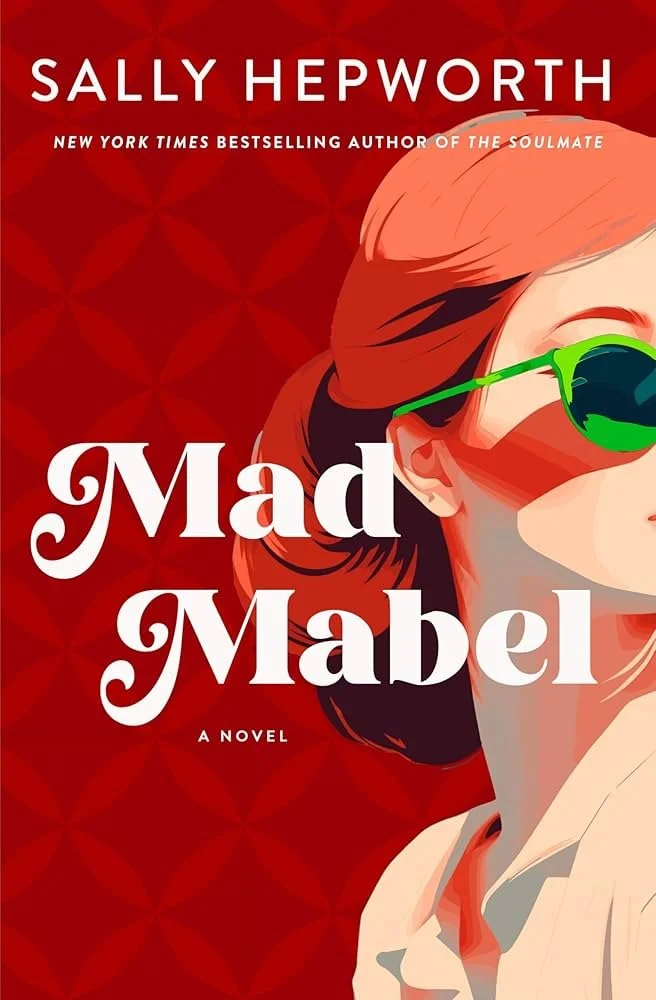
Mad Mabel
By: Sally Hepworth
[Fulfills the prompt: ‘Book with a character with a unique nickname’ for the Shelf Reflection 2026 Reading Challenge]
[On my list of Most Anticipated Books of 2026]
“It’s interesting to note that there are two groups of people who are rarely, if ever, suspected of murder. These groups are elderly women and little girls.”
This story has unexpected friendships, tragedy, self-sacrifice, Anne of Green Gables references, and Aldi’s deals.
There was lots to love about this book and only a couple disappointments that probably don’t take away from my recommendation but I can’t talk much about them without spoiling things.
[Later in this review is a spoiler section about them so scroll past if you haven’t read the book yet.]
I love the unlikely ‘friendship’ between seven-year-old Persephone and Mabel. Children have a way of getting past our defenses and seeing things adults don’t see.
I thought it had great humor. Sometimes the crotchety, grumpy elderly person trope can get old (pun intended) but in this case it became endearing.
I loved the emphasis on female friendship (though there is a caveat to this in my spoiler section).
I loved the theme of the power of kindness and the reminder to really get to know people before making judgments.
I also loved that I was surprised by the twists! This is more of a fiction story than a thriller, but there were still a couple twists that I didn’t see coming. Apparently some reviewers thought it was obviously going to end that way, but I disagree. [Unless you mostly just read one kind of book, but then I would guess you are probably rarely surprised when it comes to twists and that’s probably not the norm for most readers.]
Mad Mabel is 81 years old and very tall.
“At six feet tall with broad shoulders and a sturdy backbone, no one would ever accuse me of being birdlike— unless the bird in question was an ostrich.”
She has had her nickname from a very young age. In fact, she was “the youngest Australian ever to be convicted of murder in this country."
We don’t know right away what murders she committed. The book is told in dual POVs— ‘Present’ and ‘Then.’ Mabel’s childhood is slowly unraveled as the question of the hour is considered:
“She is known around the world as Mad Mabel. But is she mad? More importantly, is she guilty?”
Mad Mabel is set on a street in Melbourne that Mabel is quite attached to…
“The only way anyone is going to get me out of Kenny Lane is in a mahogany box. An extra-long one.”
… and it’s dotted with quite the cast of characters:
Joan- (60-odd) tight-lipped and always sending passive aggressive notes to Mabel about ‘the rules’… “more of a pen pal than a neighbor”… oh! and her nephew is a partner in a law firm!
Roxanne- “sex-crazed single mother, and her evil seven-year-old spawn”
Persephone- (7)- spawn of Roxanne… “She’s like a grenade— cute and harmless to look at, but a weapon of mass destruction nonetheless”… who has decided Mabel is her best friend… “This loud, bossy, sticky-fingered child declaring, without hesitation, that I’m the one she wants. As if I’m some grand prize and not just the only adult left upright on the street.”
Pete the Greek- (66) “loves being up in arms” and finding a great deal at Aldi’s (so great!)
Ishaan- (93) “my nemesis… has never met a vitamin he didn’t like” and owner of a “deranged Chihuahua named Nugget”
Nugget- described as “freeloading menace… presumptuous little ferret… demonic dog… awful… stupid… [and] godforsaken” (all in good fun though… Nugget gets his love eventually)
Daphne- Mabel’s ‘bosom friend’ from childhood and still best friend… “That oddball confidence. That whiff of chaos… I couldn’t decide if Daphne was utterly mad or entirely delightful.”
“Friends are like oxygen. And the only reason I’m still alive, is Daphne.”
The story basically begins with the discovery by Mabel (now called Elsie) of Ishaan’s dead body in his house. The investigation into his death reveals her true identity to the public/ her neighbors and stirs up new controversy and the same questions about her past.
The ‘Then’ timeline shows us what kind of childhood Mabel had and her relationships with her parents. It’s the ‘origin story’ of what might lead someone to kill and it highlights Mabel’s isolation and loneliness and her attempts to find love and friendship.
The ‘Present’ timeline shows us Persephone poking at Mabel’s defense mechanism of cantankerousness. We start to see Mabel’s protectiveness of Persephone shine through and a softness that betrays her no-nonsense exterior. We also see that somehow by the end of the book Mabel calls Nugget ‘my dog.’ What more character development do you need?
Somehow I have never read Anne of Green Gables and I only watched the movie for the first time a couple years ago, so unlike probably a lot of readers, the references didn’t produce quite the nostalgia it could have. But I still understand the gravity of a ‘bosom friend.’
No matter how grouchy a person’s demeanor is on the outside, one thing holds true for all of humanity— the desire to be loved, to be important to someone, to matter.
I thought this quote was great:
“It strikes me that, with all the cruelties in this world, there is still nothing quite as dangerous as kindness.”
This is the power of kindness, of truly seeking to know and understand someone. It has power to break down anger and barriers and hard exteriors and revenge.
It’s also powerful seeing Mabel learn what the pain of loving someone is:
“‘I’m not sure either of us can properly explain it… it’s the pain of loving and being loved… All I can say is that once you’ve felt it, you’ll realize that the only thing worse than the stabbing pain is the absence of it.’”
Part of her understanding that is the impact Ness had on Mabel after the loss of her mom.
“Looking back, I sometimes think this should be a service one could gift the grieving: the quiet, steadfast presence of someone who still believes there’s joy to be found— someone willing to hunt for it on your behalf.”
I think this is something we can all keep in our back pockets until we have the opportunity to show up for someone grieving. And then we can be the steadfast presence, believing that joy is not gone for good, we can hunt it down for them, we can show them the light.
One thing I didn’t like as much was that in the elevation of deep friendship we find an absence of good marriage. I wish these could have both been in the story.
The timeline in the past is partly set in the late ‘50s. After her mom dies, Mabel is raised by her Aunt Cess and Cess’s friend Ness. No doubt, Hepworth is tapping into the second wave feminism ideology to portray Cess and Ness.
Cess shares her thoughts on marriage and men with Mabel:
‘…marriage is for men. They get a free housekeeper, a whore, someone to provide them with children and to rant to about their troubles of an evening. And women get… what? Room and board?’
‘And someone who loves you?’ I countered. ‘Someone who loves you back?’ I’d read a lot of novels, and I had to admit this part quite appealed to me.”
And later:
“In fifty years this whole marriage malarkey will have gone the way of slavery, you mark my words. A stain on our history. The world is changing, there is no way women of your generation— intelligent, educated women— will continue to agree to the terms and conditions. Am I right, Mabel?”
This kind of pessimism and opposition to marriage can be traced to Simone Beauvoir during this time period when she wrote ‘The Second Sex’ detailing the secondary status of women throughout history. She basically wrote that all of man’s ideas are to to oppress women and women are conditioned not to question it. (If you are familiar with critical theory, you recognize this line of thinking). Her relationship with Sartre during her life offers an interesting perspective on this writing, but I won’t go into it here.
In the context of this story, you can look at Mabel’s father and easily see how Beauvoir’s thoughts would resonate with Cess. There is no doubt that men have oppressed women in the past and continue to take advantage of women in many ways today.
But it would be a mistake to pain a broad stroke of ‘marriage’ or ‘men’ as the problem.
Instead, I love what Caroline McCulley identifies in her book Radical Womanhood:
“[Genesis 3:1-6] teaches us that women do have a problem. But it’s not men. It’s sin. Sin warps everything, including the good that God has designed in being a man or a woman. Women sin against men and men sin against women, and everyone sins against God and falls short of His standard of holiness and perfection. Sin is the reason men have oppressed women and women have usurped men. Sin is the reason for the jealousy, selfish ambition, disorder, and every vile practice that characterizes false wisdom. Sin is the reason we need a Savior.”
We do see that Mabel recognizes one of the beautiful and good parts of marriage— it’s a mutual love. God designed marriage to be a binding of two equal people, one man, one woman, different but equal, who sacrificially love each other. They become one. Marriage that does not have love is not really marriage.
It’s not that someone being a man makes a marriage loveless. It’s sin that does that.
There have been many tragedies between men and women, even in marriage, and those are more often portrayed in books and movies, but after thousands of years, marriage is still around because it is a feature of God’s good design, not a bug. It is ultimately a representation of his love for us.
Anyway, I’m rambling now, but I just wish that ALONGSIDE the importance and elevation of same-gender friendships, I wish there could have been some support for marriage somewhere in the book.
Spoiler Comments
Okay, these are major spoiler comments, so don’t read this section if you haven’t read the book!
.
. . .
. . . .
. . .
. .
I was really loving the emphasis on female friendship. At first I wondered if Hepworth might be moving toward showing that Mabel and Daphne were lovers, but pretty much right away Mabel says she is appalled when people think that:
“… not that I take issue with lesbians, each to their own, I say— but because people have so little regard for female friendship that they can’t fathom a closeness such as we have without the romantic element.”
And I was like- Yes! The general world assumes that a deep friendship and closeness must mean there is romance, but platonic friendships are good and real!
And then she portrayed that same kind of friendship with Cess and Ness. So I was totally onboard.
But then things started to collapse in that regard. Turns out Cess and Ness were actually romantic. So there goes that friendship.
And then we find out Daphne was a childhood friend who moved away, and while Mabel endured her traumatic and unhealthy childhood, she developed multiple personality disorder and one of her personalities was a representation of Daphne. So there goes THAT friendship. And now we have a lesbian relationship and a mental health diagnosis and I wonder if this book was actually about friendship at all.
Not that it didn’t still have important themes and messages, but I think I was disappointed that it felt like one of the primary messages it seemed to push was a ruse in multiple ways.
Another thing that I was feeling after finishing the book was wondering about all those years between Mabel getting out of the psychiatric facility and where she is now. Her childhood explains why everyone thought she was ‘mad’ and why she actually murdered her father, but then we find out that she delivered a baby in the facility and that it was Peter.
The book alludes to the fact that Mabel knew Peter’s mom personally and obviously lived on that street with him for a long time. But she was still a crotchety old woman. I thought maybe she would have found more joy in such a long span of time. I don’t think this book really portrays the proper manifestation of DID— obviously for the sake of its use as a plot device— but that just means Hepworth kinda had to just skip over several decades so she didn’t have to explain how it all progressed into what it was.
While reading, it feels like a natural jump from 15-year-old Mabel to 81-year-old Mabel that flows fine in the book, but afterwards you’re like— but wait… what happened all those missing years...
Lastly, what’s up with the last line? I’m still confirming whether or not it’s the correct last line because I’m reading an ARC and it is already published and very well could have been changed.
My last line shows Persephone talking to Daisy (an imaginary friend??) about how Daisy knew Mabel and Daisy says, “Except when I knew her, she used to call me Daphne.” And then that’s the end of the book.
What?? Persephone doesn’t know that Mabel had DID— unless Mabel did talk to herself out loud as Daphne and everyone else knew it, but knowing Persephone’s personality, she would have flat out asked Mabel ‘Who is Daphne and why are you talking to yourself?’— so I’m going with: she didn’t know.
So somehow Persephone suddenly develops DID (which is odd) and then somehow has the same personality as Mabel and knows that personality’s name?
Nope.
This is weird. That’s a weird ending. I know Hepworth likes to have weird one liners at the end of her books, but this one I just don’t think worked.
Which is why I need to check if that’s actually what got published…
.
. . .
. . . .
. . .
. .
.
SPOILERS OVER
There was great character development and I do think there was justice and redemption done as the Goodreads blurb suggests. Ultimately we see sacrificial love win out and that’s always a beautiful thing.
It’s also a book that reminds us the power of words and assumptions. That we shouldn’t repeat information we haven’t verified.
Things that are totally untrue are believed all the time because they’ve been repeated so much. Just because something is ‘common knowledge’ does not mean it’s true. And when it comes to real people, we owe it to them to know them personally before making judgements— especially judgments that could ruin their lives.
So yeah, some good messages.
I think I’m mostly caught up on all the Australian lingo by now with all the Hepworth, Stevenson, Morton, and Harper books I’ve read. BUT I did learn new Australian slang from the ‘50s! And in true Australian fashion, they end in ‘ie’: widgie and bodgie.
These are terms used for women and men, respectively, who, at that time, were considered a little rebellious in their dress or hairstyles and free sexuality. In the UK they were called ‘rockers’ and in America they were ‘greasers.’ (We apparently prefer -er words…)
Recommendation
There was one main disappointment I described in my spoiler comments, but overall, I would still recommend this book. It was an enjoyable experience to read and see the life of Mabel unfold like it did. I always appreciate a book that can surprise me with the twists and this one did.
I really enjoyed Mabel’s character and wouldn’t mind another book. Maybe a book about Peter and Joan— perhaps a murder at an Aldi’s!— where Mabel gets to pop in frequently. I think that would be entertaining!
It is more of a domestic or psychological thriller than a suspense thriller, though, so if you’re looking for that specifically, this might not be the right fit. In that way it’s a little different from some of her other books that I’ve read.
I would also LOVE to recommend a different series to you that also has a dog named Nugget! The Wingfeather Saga! Totally different type of story than Mad Mabel, but if you loved one Nugget, I’m confident you’ll love the other.
For similar types of books to Mad Mabel, I would recommend what I’ve linked in the buttons below!
[Content Advisory: 7 f-words, 6 s-words; some child abuse; some innuendo; a lesbian relationship that is more than just passing characters]
**Received an ARC via NetGalley**
You can order a copy of this book using my affiliate link below.
Share this book review to your social media!