Post Woke
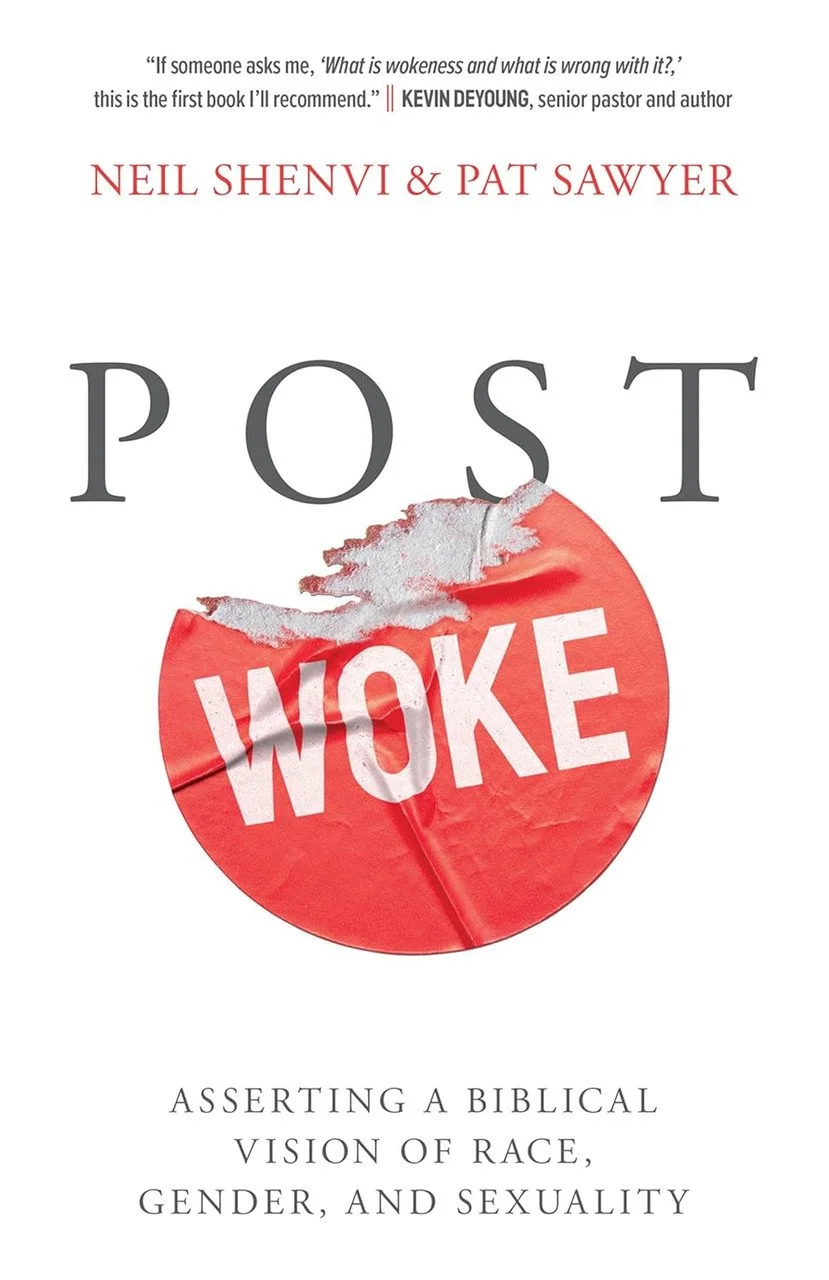
Post Woke: How Christians Can Think Clearly About Critical Theory, Race, Gender, and Sexuality
By: Neil Shenvi & Pat Sawyer
[On my list of Most Anticipated Books of 2026]
“It’s impossible for two worldviews to peacefully coexist in our lives. They will constantly be competing for our allegiance.”
The title alone will stir up a lot of feelings in a lot of people. Some may never even pick up the book because of the use of the word ‘woke.’ I admit, it’s a brave choice for a title because of all the baggage that term holds.
The authors acknowledge that a lot of conservative people have abused the term and applied it to “malign [anything]… they dislike, no matter how benign it actually it is…” That is not what they are doing in this book.
They use the term ‘woke’ to refer to what it meant when the word first came on the scene: “wokeness has its roots in a body of scholarship known as the critical tradition.”
When it comes down to it, I think the majority of people understand the set of ideals that is attached to the term ‘woke’ whether you like the term or not.
Right upfront I will say, if you are not a follower of Christ, you are not the technical audience for this book. Critical Dilemma may be a better option for you, but I would still recommend Post Woke, because the authors do a fantastic job of explaining what critical theory is, how it shows up in the world today, and where it fails to promote human flourishing.
The authors sum up the content of the book before they lay out some practical guidance on applying the knowledge in our spheres of influence:
“we have explained the ideas at the heart of wokeness, have shown why they’re incompatible with Christianity, and have offered a biblical framework for thinking about race, gender, and sexuality… now how can we communicate these truths to our children, our neighbors, or our pastors?”
The catalyst for this book was discovering how critical theory ideology has found its way into the Christian church because many have not been equipped to identify it for what it is. Its entrance can be subtle but the effects are not.
What’s at stake?
“[Critical theory’s] basic assumptions will constantly run up against core biblical truths about God, man, revelation, truth, sin, redemption, authority, hierarchy, gender, and sexuality. These are serious problems that Christians cannot overlook.”
“We want to show people not only how wokeness gets these topics wrong, but how the Bible gets them right.”
For those of you who, like me, have already ready Shenvi and Sawyer’s book Critical Dilemma, you may be wondering— how is this book different than that? should I read both?
The authors answer this question specifically. They said Post Woke is not just a condensed version but meant to be a standalone resource.
“What distinguishes it? Critical Dilemma was accessible but intentionally academic… Post Woke is written for a broader audience… Post Woke is focused less on the esoteric theories that undergird wokeness and more on its everyday expression in the real world… we aim to show how woke ideas show up ‘on the ground’… Critical Dilemma was a resource for anyone— Christian or non-Christian— who wanted to understand what wokeness is, where it came from, and how to respond to it… Post Woke is more specifically written for a Christian audience… we assume a basic, shared Christian theological framework… Post Woke is meant to be practical… we want you to walk away with a plan of action…”
I enjoyed both books. But I understand that not everyone wants to take the time to read two books on the same topic that are over 250 pages each.
If you prefer a more academic book with lots of sources and want critical theory represented by quotes from critical theorists themselves then I would suggest Critical Dilemma be your first read. I would also recommend this one if you are not a Christ follower.
If you are not concerned with all the details and you just want the basic explanation and would rather spend more time talking about the practical outworking of asserting a biblical view, then Post Woke is your book.
I think I personally preferred Critical Dilemma, but I think it’s partially because there was a decent amount of overlap in Post Woke so I wasn’t hearing the information for the first time. I still appreciated the practical ‘here’s what you can do’ steps they provide in this book.
Overall, I don’t know if it makes sense to read both books unless you’re really interested in the topic.
One thing I really like about both of these books is that the authors understand the appeal of critical theory. I think there are a lot of people that aren’t that opposed to ‘woke’ ideology because from their perspective it seems like it is caring for the marginalized and seeks to fight injustice. What could be wrong with that?
“Everyone craves meaning, purpose, morality, and community. We want to feel that we are doing good in the world. Contemporary critical theory channels that energy and directs it down the path of activism… [but] the story told by critical theorists is necessarily simplistic because its primary purpose is not accuracy but activism.”
They go on to summarize the appeal of wokeness:
“It takes racism and sexism seriously. It highlights shameful, but unfortunately very real, episodes in our nation’s past. It calls attention to widespread racial disparities and present-day mistreatment of women. It expresses love and concern for the vulnerable. It repudiates oppression and injustice. It positions itself as compassionate. It fills the spiritual void left by the cultural displacement of Christianity. And it provides people with a secular metanarrative that offers them meaning, purpose, moral commitments, and community.”
But a critically thinking Christian must see that what critical theory offers is a worldview, which is a set of beliefs that answers questions like: who are we? what is wrong with the world? how do we fix what’s wrong? what is our purpose? what happens when we die?
The answers to these questions are what set it in opposition to Christianity.
[Sidenote: Most organizations or people spreading this ideology aren’t calling it critical theory. We have to be wise in evaluating the concepts that root any ideology; be aware that you may be holding onto a tenet of critical theory without even realizing it!]
The authors highlight the four pillars (core ideas) of Contemporary Critical Theory that unify all the branches from the critical race theorists, to the queer theorists and intersectional feminists, etc: Social Binary, Hegemony, Lived Experience, and Social Justice. (I detail these more in my review of Critical Dilemma if you are interested).
Then Shenvi and Sawyer outline the four major areas where critical theory and Christianity are incompatible:
the nature of oppression (key point: not all norms are oppressive, some are God-ordained and therefore good—to follow their logic: “if oppression occurs whenever those in authority use their power to impose their norms and values… then who is the ultimate Oppressor? God himself.”— making this belief system incompatible with Christianity)
the nature of our identity (key point: CCT believes identity is collective and socially constructed— Christians view identity as being children of God that takes precedence over anything else— viewing people as oppressed or oppressors based on gender, race, sexuality, etc would breed division, suspicion, and resentment in the church)
the nature of justice (key point: CCT sees any disparity as evidence of discrimination; their version of justice requires equal outcomes not just equal opportunities meaning “the demands of equity are open-ended and never quite seem to be satisfied”; in seeking to enact their version of justice they codify partiality; also “the idea of retributive justice, which is prominent in the Bible is almost entirely absent (even problematized) in critical theory”)
the nature of truth (key point: CCT elevates lived experience in determining truth and is skeptical of objective claims whereas Christians should test any claim against Scripture; truth doesn’t cease to be truth because of the social positioning of the one speaking it— Christianity is based on objective truth claims made by Jesus himself)
The good news for those who want to fight racism and sexism, care for the vulnerable, oppose oppression and injustice, and find purpose that is rooted in love— you aren’t giving any of that up to separate from ‘wokeness’ and be rooted in Christ! Those are all biblical things.
I liked the section where the authors showed how contemporary critical theory is particularly prone to certain fallacies. For example, bulverism is basically wish fulfillment. You believe such and such because it’s a psychological projection of your need to feel loved, your guilty conscience, desire to escape death, etc.
It ends up being paramount to CCT’s defense because anyone who disagrees with them or questions them is ‘blinded’ by their race, gender, or privilege. Thus, truth can change depending where your ‘identity’ stands on the table of intersectionality.
The authors describe six other common fallacies found in the logic of critical theory and then offer some good advice for engaging with people who are employing them.
There are also chapters dedicated to looking closer at race, gender, and sexuality and showing how God and his Word offer us a better story about how to view ourselves and each other.
Interspersed are helpful comments about how to handle personal pronouns, how to teach our kids to push back against victimhood narratives, how to be more confident in our parenting in a world that is trying to claim children as belonging to the state, how to have a biblical view of hierarchy, how to celebrate diverse ethnicities while recognizing the fluidity of people groups mixing and changing, and more.
As someone who has read extensively on these topics, I didn’t find anything new, but what I found was steady. I know that any Christian who reads this book will come away feeling more confident in pursuing God’s truth and biblical design for us as individuals and for our communities as a whole.
God’s way is for our good and promotes human flourishing. The Deceiver tries to destroy that, to create enmity and division between God’s image-bearers, to pervert anything that represents God’s relationship to his people (marriage), and to call God’s objective truth into question.
As Christians, that should matter to us. If we get the problem wrong (as the authors rightly argue critical theorists do) we get the solution wrong. Social justice can’t solve the problem of sin in the human heart. Only God can transform us.
Shenvi and Sawyer have written this awesome resource that reveals the heart of wokeness and how it infiltrates even our churches, but also reminds us what we should be pursuing instead. We are not left aimless and wondering.
“We must not merely tear down. We must also build up, offering and exemplifying a positive vision for loving across difference. Our lives should be an ongoing testimony to the world of the power of Christ, the love we have for one another as brothers and sisters in Christ, and the love we have for our fellow human beings.”
Negative Reviews
As with any book that addresses worldview claims, this book is going to ruffle some feathers and offend a lot of people who believe differently.
But I wanted to specifically address a one-star review that stated:
“The core of Christianity is that we are to love our neighbors without judgement. That's it. That is all. Anything else is blasphemy- as is this book. Nothing other than hate disguised behind ‘Christianity.’”
I address this because I gather the reviewer is a Christian by their use of ‘we’ and I think it’s fair to engage with someone who is supposedly approaching this book with the same worldview as myself.
Loving our neighbors is indeed a core tenet of Christianity. Jesus says this after being asked what the greatest commandments are. However, first he states to love God with all our hearts, souls, and minds. He says the second commandment is like the first. Loving our neighbor is like loving God. But, in order to love our neighbor well, we must know what it is to love God.
The Bible has a lot to say about that. But one of the primary ways we love God is by obeying him. By loving what he loves. By submitting to his authority in our lives.
We love our neighbors by desiring good for them. We know what is good for them by knowing what God wants for them.
It is popular to claim the Bible says not to judge (quoting Matthew 7:1) and then immediately take it out of context. Do we really think God is asking us to never make moral judgments? That is not what is taught in Scripture. We make moral judgments all the time to know what is good and what is evil, what is right and what is wrong.
I love this quote from Rachel Gilson:
“Usually, when “judge not” is used to shut down moral conversation, it’s asserting that we don’t have the right to correct each other’s views on whatever topic is at hand. But contrary to that interpretation, we need to be deeply concerned with one another, that our view of sin and righteousness aligns with Jesus Christ’s.
Love includes the command “Exhort one another every day, as long as it is called ‘today,’ that none of you may be hardened by the deceitfulness of sin” (Heb. 3:13). The nature of sin is pure deceit, and we’re all susceptible to falling for it. Jesus Christ came full of grace and truth to set us free from sin, death, and lies, and to make us agents for this freedom for others as well. Let’s not judge as if we’re the ones who declare each other ultimately guilty or innocent. Instead, let’s discern together in proper fear and reverence the will of the Lord.”
To boil all of Scripture down to: ‘love our neighbor without judgment. That is all.’ really seems to miss a lot.
To be fair, she does further clarify in an additional comment “one cannot claim to love God while hating people they don't understand and refuse to even try to learn about” proving she knows loving our neighbor stems from our love for God.
I would argue that it’s clear from both of the authors’ books that they DID learn about these other beliefs— way more than most people reading the books. And it’s also clear that they do not hate those who believe differently than them— there are no personal attacks or degradation in the book; they engage with public quotes about CT’s tenets.
But that’s really what so much of these conversations come down to.
To ‘disagree’ is not synonymous to ‘hate’, and I refuse to capitulate to a redefinition of this word.
I understand that it might feel hateful to some because they have chosen to adhere to a set of beliefs that tell them their race, gender, or sexuality is the most important and defining thing about them, but that is simply not true. Their value is based in something far deeper than that.
I’m sure there are people who identify as Christians who actually do treat people in a way that could be labeled ‘hate.’ But Christian beliefs themselves, are not hateful. God’s law is not oppressive to us; it’s freeing to us because his design is for our good and his glory.
Again, I engage with this negative review only because she claims to be a Christian and because she voices what I actually hear from lots of people— Christian and otherwise— and I think it’s an unfair and unreasonable claim to assume anyone (or more specifically these authors) who makes moral judgments against a belief (rather, a whole set of beliefs) is being hateful and is acting out of accordance with the teaching of Scripture.
Recommendation
Not only did I love Shenvi’s book Why Believe? and their other co-authored book, Critical Dilemma, I am thankful for their book Post Woke as well.
They rightly spur us on to take ownership of our beliefs and to recognize when false doctrines (in this case, in the form of critical theory) sneak into our lives and churches and hinder us from pursuing God’s good design and truth.
This book will help any reader equip themselves and other Christians “to recognize and reject contemporary critical theory… to resist the cultural pressure to compromise, soften, or reject what the Bible teaches.”
I definitely recommend this book to Christians because it will better explain why the ideology often associated with ‘wokeness’ is opposed to the core tenets of our beliefs as Christ followers. It will help you better handle how you engage with others who believe differently, and how to teach your kids to recognize it as well.
If you are not a Christ follower, I would probably suggest you read Critical Dilemma instead of this one unless you plan to read both. While it still addresses Christianity specifically, I think Critical Dilemma will show more of why the ideology of critical theory should matter to even people who aren’t Christians.
Further Reading
Here are some other related books that I’ve reviewed that they referred to in this book:
The Rise and Triumph of the Modern Self by Carl Trueman (He wrote the foreword to Critical Dilemma)
Cynical Theories by Helen Pluckrose and James Lindsay
Discrimination and Disparities by Thomas Sowell
Jesus and John Wayne by Kristen Kobes Du Mez
Tactics by Greg Koukl
Raising Conservative Kids in a Woke City by Katy Faust (I don’t know if they quoted the book, but they quoted her)
Walking in Unity: Biblical Answers to Questions on Race and Racism by Krista Bontrager & Monique Duson
The Counterweight Handbook: Principled Strategies for Surviving and Defeating Critical Social Justice— At Work, in Schools, and Beyond by Helen Pluckrose (I have not read this book but I’m intrigued by it, especially because I don’t think Pluckrose is a Christian)
The Anxious Generation by Jonathan Haidt
Five Lies of Our Anti-Christian Age by Rosaria Butterfield
The Coddling of the American Mind: How Good Intentions and Bad Ideas are Setting a Generation For Failure by Jonathan Haidt and Greg Lukianoff
**Received a copy via Harvest House in exchange for an honest review**
You can order a copy of this book using my affiliate link below.
Share this book review to your social media!